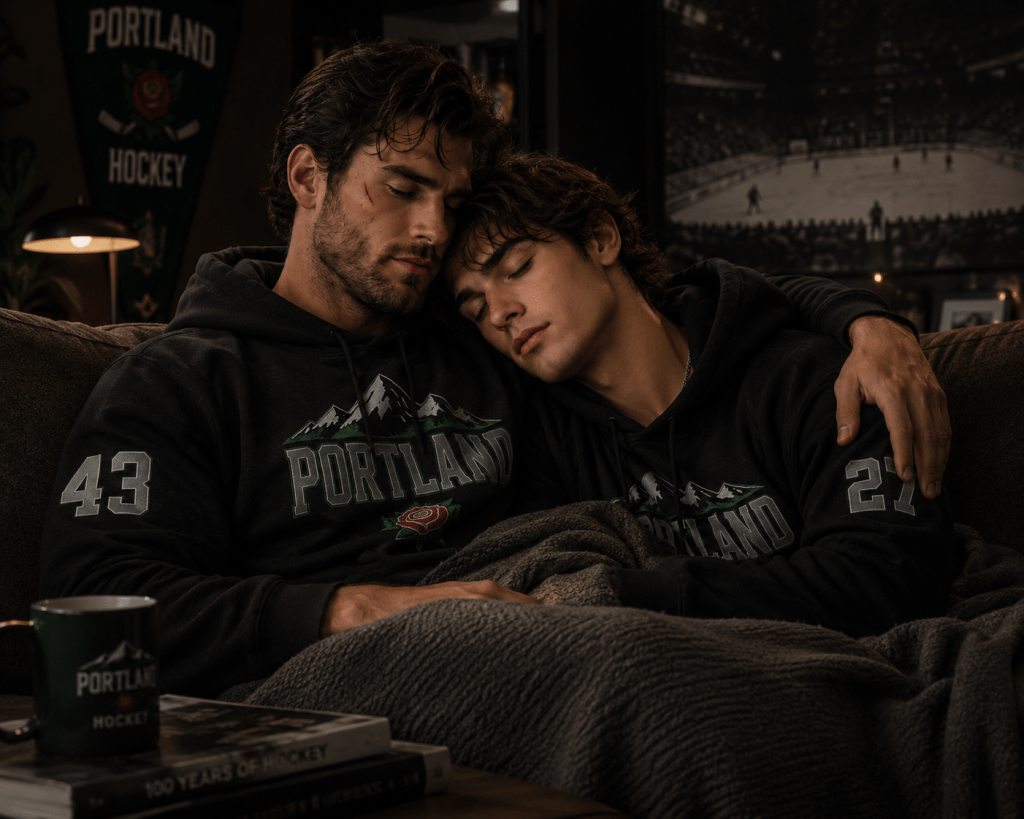
Why Protective Characters Work — And It’s Not About the Bullets

There is a version of the protective character that I think gets written more than it should — the one who throws himself in front of danger, who takes the hit, who stands between the person he loves and whatever catastrophic thing is bearing down on them. Dramatic. Cinematic. Occasionally genuinely moving.

But that is not, I would argue, why protective characters actually work.

That is not why we fall for them.

We fall for them because of the other thing. The small thing. The thing that costs nothing except attention and communicates everything.

The walking on the gutter side of the footpath.

If you know, you know — and if you’ve ever walked beside someone who quietly repositioned themselves so they were between you and the traffic without making anything of it, without announcing it or expecting acknowledgement, you know exactly what I mean when I say that small gesture lands harder than any dramatic sacrifice. It is not about the cars. It has never been about the cars. It is about the fact that someone is thinking about you, specifically, in the small and constant way that love actually looks like in real life.

Hold that thought. That is the whole thesis.

The umbrella tilted toward you in the rain while they get rained on. The hand that appears at the small of your back in a crowd, not possessively, just — I know where you are, I have you. The coffee that appears on your desk because they noticed you hadn’t eaten. The door they get to first. The coat they put around your shoulders before you’ve realised you’re cold.

None of these things require heroism. All of them require the same thing, which is paying attention. Which is caring enough about one specific person to notice what they need before they name it, and then quietly providing it without requiring a medal for the effort.

That is what Deacon Worth does. Not perfectly — he is a Worth, which means he is also occasionally overprotective in the ways that require a conversation, and Kon has opinions about this and is not shy about sharing them. But underneath all of that, underneath the big gestures and the hard moments, Deke is a man who notices. Who repositions himself between Kon and the cold wind without thinking about it. Who tracks where Kon is in a room not out of possession but out of the same instinct that makes you keep half an eye on the person you love in a crowd, just to know they’re there and fine and not needing you for anything but available to need you if they do.
That is the protective character that works. Not the one with the heroic sacrifice — or not only that one, not only in the dramatic moment. The one who has quietly decided that your comfort and safety and ease are worth their ongoing attention. The one for whom protection is not an event but a habit, built so deeply into how they love that they don’t even notice they’re doing it half the time.

We notice, though.

Readers notice. Because most of us have been cold in a crowd and wished someone would put a coat around our shoulders. Most of us have walked on the traffic side ourselves and wondered what it would feel like if someone just, without comment, moved us gently to the inside.

It is such a small thing.

It is the whole thing.

— Bella 🏒
On Writing Emotional Safety

Romance has changed. I have been reading it long enough to say that with some authority, and I am glad of it in ways that are difficult to fully quantify.

When I started reading romance the template was fairly fixed. The men were alpha — dominant, certain, occasionally insufferable about it — and the women were strong in the ways that were permitted, which is to say strong enough to be interesting but not strong enough to meaningfully challenge the architecture of the story. Everyone knew their place. Everyone stayed in their lane. The emotional landscape was, by modern standards, a fairly narrow one.

What we write now — what the best of the genre is doing now — is something altogether more honest than that. And Isolated is my attempt to do the most honest version of it I know how to do.

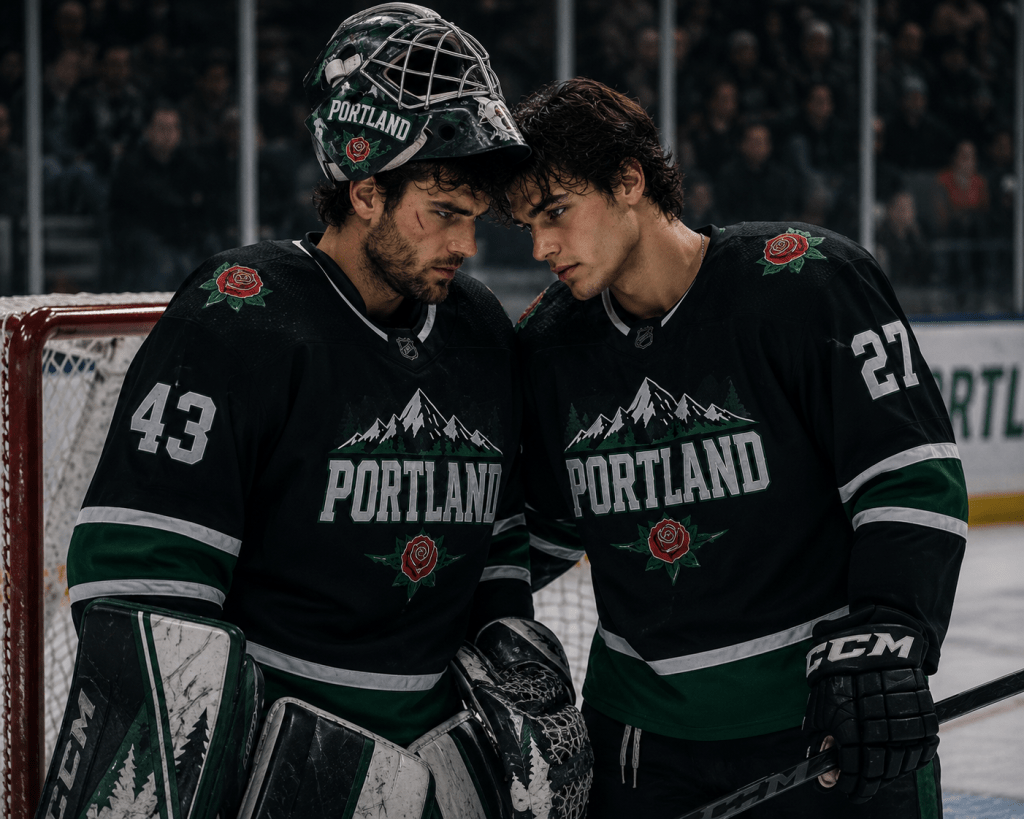
Kon is a young Russian man who ran from his home country to save his own life. Whether that is a perfectly rational assessment of his situation or not is almost beside the point — it is what he believed, with every cell in his body, and that belief drove every decision he made. He fled something real. He carries that flight with him. And on top of that weight, on top of the fear and the displacement and the sheer enormity of starting over on a different continent, he is in love with a man he first watched — first wanted, if we’re being honest, because Kon has always been honest with himself even when it terrified him — while he was still a minor. He arrived in America raw and open and frightened in ways he would never fully name, and he needed, perhaps more than he needed anything else, to be safe.

And then there is Deke.

Deacon Worth has been beaten for who he is. Not metaphorically — physically, by people who suspected what he was before he had even found the words for it himself. He came out anyway. He became, almost without trying, the league’s poster boy for inclusivity — which is its own complicated thing to carry, being someone’s symbol, being the face of something larger than yourself when all you really wanted was to be allowed to exist without apology.

And then he falls in love with Kon.

Two people, both of whom have learned — through completely different routes, at completely different costs — that the world is not automatically safe for who they are. Two people who have every reason to keep their walls up and protect what’s tender in them and never, ever let anyone close enough to use it against them.

What they build together is not a grand gesture. It’s not a declaration or a rescue or a dramatic moment of surrender. It is something quieter and harder and more valuable than any of those things.

It is emotional safety. The real kind. The kind that gets built slowly, in small increments, through a hundred moments of choosing to be honest when dishonesty would have been easier. Through Deke learning that his strength does not require Kon’s smallness. Through Kon learning that vulnerability offered to the right person is not weakness — it is the bravest thing he has ever done, and he has done genuinely brave things. Through both of them, gradually, learning to be held.

That is what romance can do now that it couldn’t always do. It can show us people who are not performing their gender or their strength or their certainty. It can show us men — complicated, scared, hopeful, real men — learning to be emotionally safe with each other. Learning that love is not a transaction or a conquest or a lane you stay in.

Learning that the softest parts of them are not the parts that need protecting.

They are the parts worth giving.

— Bella 🏒

On Writing Tenderness Between Men

I want to talk about something that comes up more than it should, which is the idea that tenderness between men requires explanation.

It doesn’t. But here we are, and since we’re here I’m going to make the case as plainly as I can.

Men are tender. Real men, actual men, the men who exist in the world outside of fiction — they are tender with their children, with their elderly parents, with the people they love who are hurting. They bring cups of tea without being asked. They sit with someone in the dark. They know, without being told, when what’s needed is a hand on the back rather than a solution. Nobody bats an eye at any of this, and rightly so.

So why, the moment two men love each other, does tenderness become something that apparently needs to be justified?

I’ve thought about this a lot, because I write men loving men and I write them the way I believe them to be — which is fully human, with the full range of what that means. Deacon Worth does not become a different person because the love of his life is Konstantin Andropov rather than a woman. He is still a Worth, still led by his heart before his head has a chance to object, still capable of touching someone’s face with a tenderness that costs him nothing and means everything. That is who he is. The gender of the person receiving that tenderness doesn’t change it.

Because here is what I know about the men I write: they are not tender despite being the men they are. They are tender because of it. Because they have chosen, consciously or not, to reject the premise that strength and gentleness cannot occupy the same person at the same time. They are strong men who have simply never accepted the idea that tenderness is something to be rationed or hidden or ashamed of. The ones who have been hardened by the world — and some of mine have been hardened considerably — love with a quietness and a specificity that would undo you if you saw it up close.

What I’m really writing, when I write tenderness between men, is perspective. The perspective of a man who looks at the person he loves — this specific person, this face, these hands, this complicated and particular human being — and feels something that expresses itself gently. Not because he’s performing sensitivity. Not because the genre demands it. But because that is what love does when it’s paying attention. It notices. It takes care. It shows up in the small gestures that accumulate over time into something enormous.

That is not a female experience. That is not a male experience. That is a human experience, and my men get to have it, and I will not be writing them any other way.

They love who they love. They love them tenderly. That’s the whole story.

— Bella 🏒

On Found Family and the Teams We Build

One of the things I love most about writing hockey romance is the thing that was true about hockey long before I started writing it: the team is always, already, a family.

Not always a comfortable one. Not always a quiet one. Families rarely are. But a family in the truest sense — people who did not choose each other initially and who, through the specific alchemy of proximity and pressure and shared purpose, become something to each other that has no cleaner name than that.

The PHL has its blood families, of course. Brothers who came up through the same system, who learned to skate in the same backyard, who ended up on the same roster because the talent ran in the same veins. Fathers whose sons are now playing the game they played a generation before, sometimes for the same organisation, sometimes facing each other across a faceoff dot with the specific complicated weight of all that history between them. Those stories are real and they are rich and they are part of the fabric of the league.

But they’re only part of it.

What gets me every time — what got me long before I started building the PHLu universe, when I was just a reader falling in love with this sport — is the found family. The one that forms inside a locker room and on a bench and on a bus between cities at two in the morning. The one that happens because these men spend more time together than they spend with the people who chose them by love or marriage or blood. You cannot be that present in each other’s lives without becoming something. The question is only what shape the something takes.

Sometimes it’s the veteran who takes the rookie under his wing and teaches him how to survive the league and doesn’t say a word about it to anyone. Sometimes it’s the line that develops the specific shorthand of people who have been reading each other’s bodies on the ice for long enough that the communication happens below language. Sometimes it’s the goalie and his defense, who have a relationship that the rest of the team watches and cannot fully explain and does not try to.

And sometimes — and this is the one that breaks my heart open in the best possible way — you find the small family within the family. The cluster of three or four or five players who have become something specific to each other inside the larger something of the team. The ones who have each other’s emergency contacts. The ones who show up. The ones for whom ‘teammate’ stopped being the right word somewhere around the second season and nobody has quite found the better one yet.

The PHLu is full of them. The Worth family gave Portland its backbone — real brothers, real history, the complicated grace of people who grew up together and are now performing the same work in front of crowds — but they are not the whole of what the Portland Pioneers are. The Pioneers are also every player who walked into that locker room without a single person who belonged to him and found, slowly and then all at once, that he had a room full of them.

That’s the story I keep coming back to. Not the blood families — though I love them — but the ones that built themselves from scratch, in the middle of a season, in the specific hothouse of a roster that has to function as one thing while being made of very many different and individual people.

It doesn’t take long, in hockey, to find the small families within teams. They’re always there if you look.

I have been looking for a long time. I am still finding them.

🏒 — Bella