
Romance has changed. I have been reading it long enough to say that with some authority, and I am glad of it in ways that are difficult to fully quantify.
When I started reading romance the template was fairly fixed. The men were alpha — dominant, certain, occasionally insufferable about it — and the women were strong in the ways that were permitted, which is to say strong enough to be interesting but not strong enough to meaningfully challenge the architecture of the story. Everyone knew their place. Everyone stayed in their lane. The emotional landscape was, by modern standards, a fairly narrow one.
What we write now — what the best of the genre is doing now — is something altogether more honest than that. And Isolated is my attempt to do the most honest version of it I know how to do.
Kon is a young Russian man who ran from his home country to save his own life. Whether that is a perfectly rational assessment of his situation or not is almost beside the point — it is what he believed, with every cell in his body, and that belief drove every decision he made. He fled something real. He carries that flight with him. And on top of that weight, on top of the fear and the displacement and the sheer enormity of starting over on a different continent, he is in love with a man he first watched — first wanted, if we’re being honest, because Kon has always been honest with himself even when it terrified him — while he was still a minor. He arrived in America raw and open and frightened in ways he would never fully name, and he needed, perhaps more than he needed anything else, to be safe.
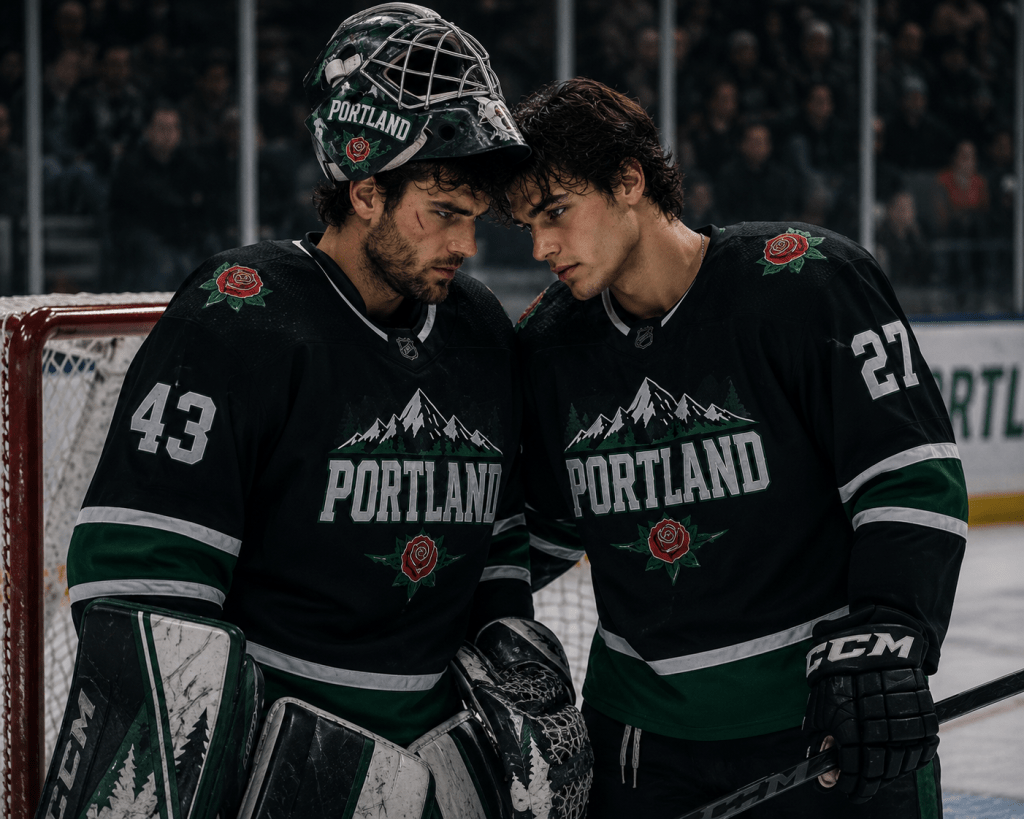
And then there is Deke.
Deacon Worth has been beaten for who he is. Not metaphorically — physically, by people who suspected what he was before he had even found the words for it himself. He came out anyway. He became, almost without trying, the league’s poster boy for inclusivity — which is its own complicated thing to carry, being someone’s symbol, being the face of something larger than yourself when all you really wanted was to be allowed to exist without apology.
And then he falls in love with Kon.
Two people, both of whom have learned — through completely different routes, at completely different costs — that the world is not automatically safe for who they are. Two people who have every reason to keep their walls up and protect what’s tender in them and never, ever let anyone close enough to use it against them.
What they build together is not a grand gesture. It’s not a declaration or a rescue or a dramatic moment of surrender. It is something quieter and harder and more valuable than any of those things.
It is emotional safety. The real kind. The kind that gets built slowly, in small increments, through a hundred moments of choosing to be honest when dishonesty would have been easier. Through Deke learning that his strength does not require Kon’s smallness. Through Kon learning that vulnerability offered to the right person is not weakness — it is the bravest thing he has ever done, and he has done genuinely brave things. Through both of them, gradually, learning to be held.
That is what romance can do now that it couldn’t always do. It can show us people who are not performing their gender or their strength or their certainty. It can show us men — complicated, scared, hopeful, real men — learning to be emotionally safe with each other. Learning that love is not a transaction or a conquest or a lane you stay in.
Learning that the softest parts of them are not the parts that need protecting.
They are the parts worth giving.
— Bella 🏒

