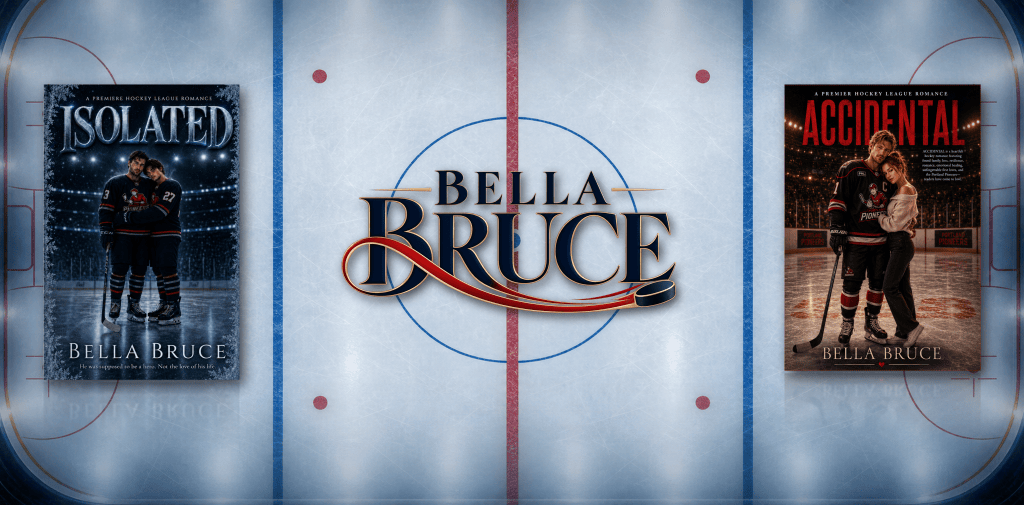
Bella Bruce writes emotional hockey romance filled with found family, hard-won love, chaotic locker rooms, and the kind of people who leave the hallway light on for you. Creator of the Premier Hockey League universe.
There is a version of the protective character that I think gets written more than it should — the one who throws himself in front of danger, who takes the hit, who stands between the person he loves and whatever catastrophic thing is bearing down on them. Dramatic. Cinematic. Occasionally genuinely moving.
But that is not, I would argue, why protective characters actually work.
That is not why we fall for them.
We fall for them because of the other thing. The small thing. The thing that costs nothing except attention and communicates everything.
The walking on the gutter side of the footpath.
If you know, you know — and if you’ve ever walked beside someone who quietly repositioned themselves so they were between you and the traffic without making anything of it, without announcing it or expecting acknowledgement, you know exactly what I mean when I say that small gesture lands harder than any dramatic sacrifice. It is not about the cars. It has never been about the cars. It is about the fact that someone is thinking about you, specifically, in the small and constant way that love actually looks like in real life.
Hold that thought. That is the whole thesis.
The umbrella tilted toward you in the rain while they get rained on. The hand that appears at the small of your back in a crowd, not possessively, just — I know where you are, I have you. The coffee that appears on your desk because they noticed you hadn’t eaten. The door they get to first. The coat they put around your shoulders before you’ve realised you’re cold.
None of these things require heroism. All of them require the same thing, which is paying attention. Which is caring enough about one specific person to notice what they need before they name it, and then quietly providing it without requiring a medal for the effort.
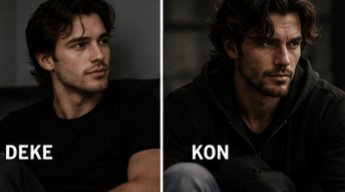
That is what Deacon Worth does. Not perfectly — he is a Worth, which means he is also occasionally overprotective in the ways that require a conversation, and Kon has opinions about this and is not shy about sharing them. But underneath all of that, underneath the big gestures and the hard moments, Deke is a man who notices. Who repositions himself between Kon and the cold wind without thinking about it. Who tracks where Kon is in a room not out of possession but out of the same instinct that makes you keep half an eye on the person you love in a crowd, just to know they’re there and fine and not needing you for anything but available to need you if they do.
That is the protective character that works. Not the one with the heroic sacrifice — or not only that one, not only in the dramatic moment. The one who has quietly decided that your comfort and safety and ease are worth their ongoing attention. The one for whom protection is not an event but a habit, built so deeply into how they love that they don’t even notice they’re doing it half the time.
We notice, though.
Readers notice. Because most of us have been cold in a crowd and wished someone would put a coat around our shoulders. Most of us have walked on the traffic side ourselves and wondered what it would feel like if someone just, without comment, moved us gently to the inside.
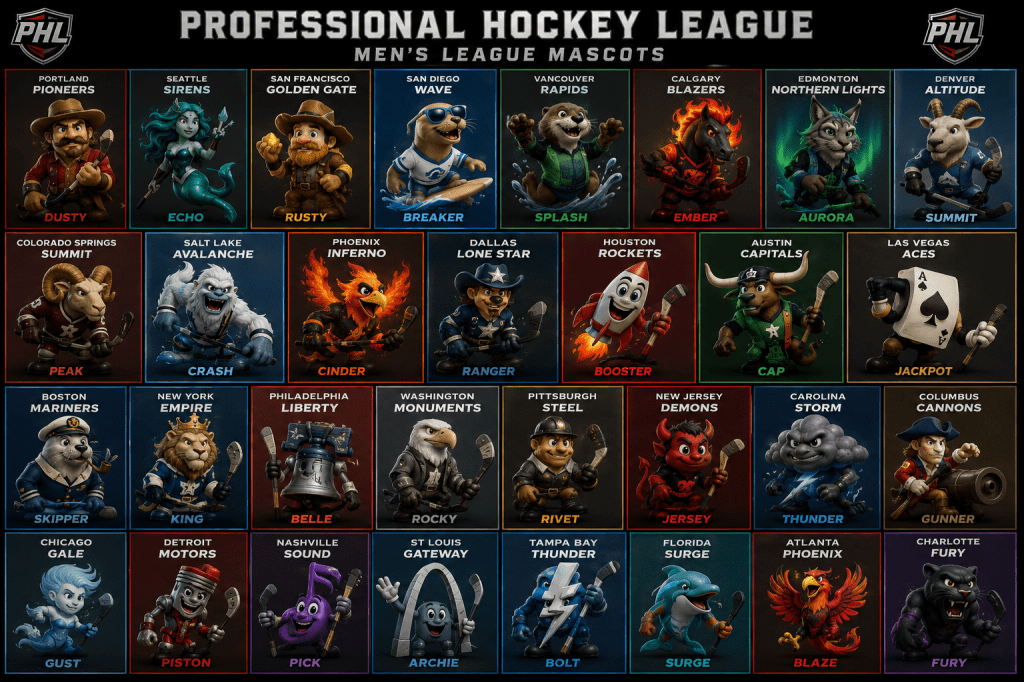
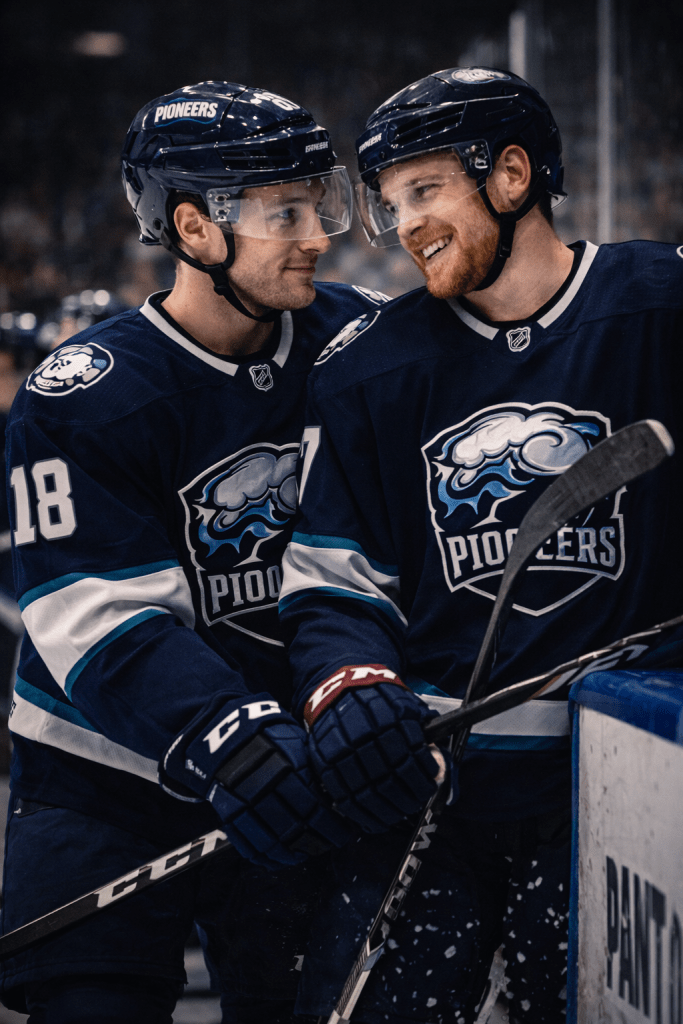
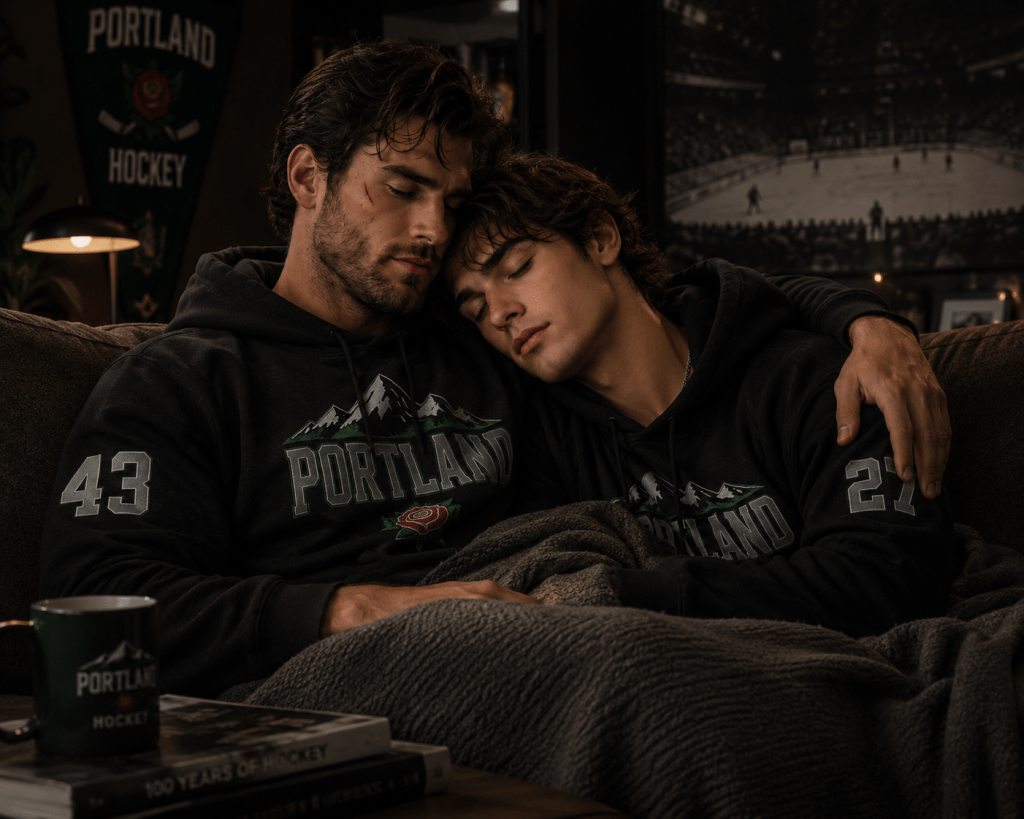
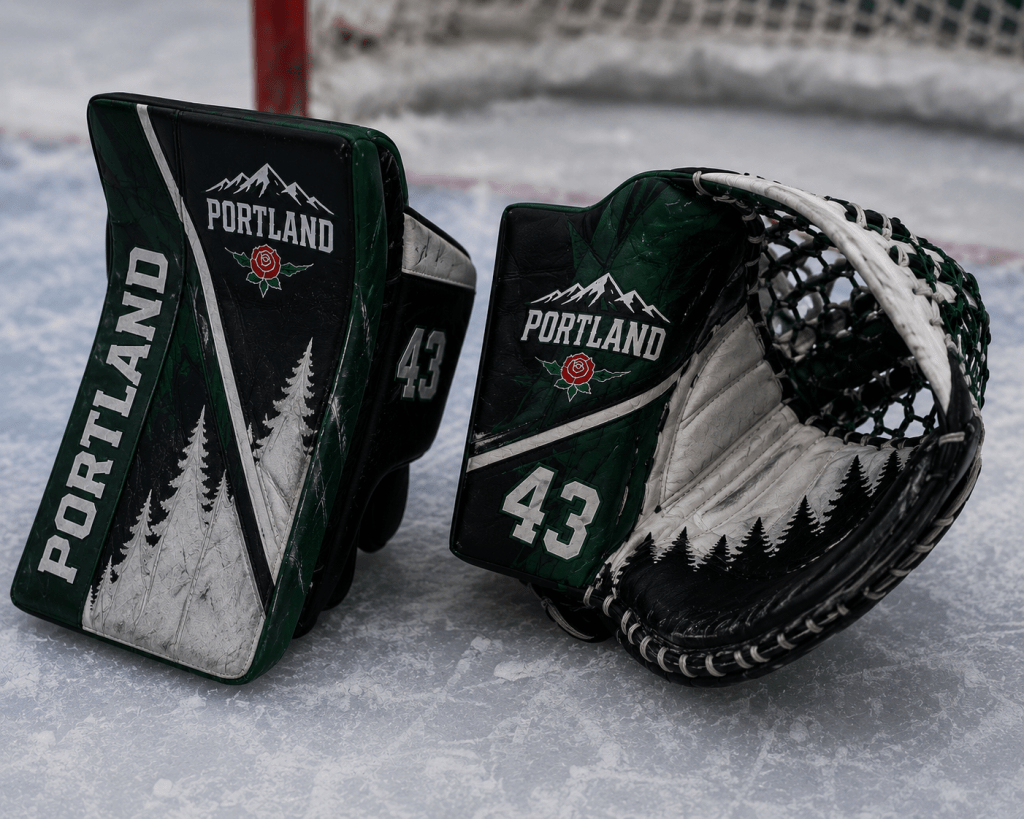
What you’re looking at — if you’ve scrolled down to the images I’ve attached to this post, and I hope you have — is the Professional Hockey League. The PHL. Men’s league, women’s league, full team rosters of logos, jerseys, and mascots for every franchise in both competitions.
Portland Pioneers. Seattle Sirens. San Francisco Golden Gate. San Diego Wave. All the way through to Charlotte Fury and Kansas City Heartland and everyone in between.
Every team has a logo. Every team has a home jersey. Every team has a mascot with a name — and I want to take a moment to appreciate that the Portland Pioneers’ mascot is called Dusty and he is wearing a cowboy hat, and the Nashville Sound’s mascot is a purple musical note called Pick, and the Dallas Queens have a horse in a crown called Queenie, and I love all of them unreasonably.
Now. Here is the thing I need to address directly.
I am, in my books, currently using three of these teams.
Three.
Out of thirty-two in the men’s league and sixteen in the women’s league. I have built forty-eight teams — complete with branding, mascots, staff rosters, full operational crews, support staff, back office personnel, and arena teams — and I am, at present, using three of them with any regularity.
Is this crazy?
I have been asked this question, mostly by myself at two in the morning, and I want to give you my honest answer.
No. It is not crazy. It is thorough research, and I will tell you why.
The PHLu exists as a universe, not a backdrop. When Deacon Worth skates out onto the ice in Portland, he is not skating into a vague gesture at a hockey league. He is skating into something real — real in the way that matters for fiction, which is to say internally consistent, fully populated, and detailed enough that I know exactly what the rivalry history is between the Pioneers and the Seattle Sirens, why the Las Vegas Aces have the reputation they do, and what it means for a player to be traded to the Austin Capitals versus the New York Empire. I know the arena staff by name. I know who runs the back office. I know the mascots and what they mean to their home crowds.
And that last part matters more than it might seem.
When a character gets traded — when someone leaves the team they’ve bled for and shows up in a different dressing room, a different jersey, a different city — that transition has weight. Real weight. I know exactly what colours they’re leaving behind and exactly what colours they’re pulling on for the first time. I know what their old mascot looked like and what the new one means to the fans in that arena. If a character hands a kid a puck with their old team’s mascot on it in a quiet moment of goodbye, I know what that mascot is. I don’t have to make it up on the spot or leave it vague or hope the reader doesn’t notice the gap. It’s there. It’s real. It’s Dusty or Cinder or Bolt or Surge, and it means something specific because the whole universe means something specific.
That is what the worldbuilding is for. Not the parts that end up on the page explicitly — but the parts that make everything on the page feel true.
None of it ends up in the text in any heavy-handed way. You will not read a chapter in which I pause to describe Jackpot the Las Vegas Aces mascot in loving detail. That is not what this is for.
What it is for is the texture. The specificity. The particular quality of a fictional world that has been thought through rather than sketched — the kind of world where a character can make a throwaway comment about another team and it lands as true because it is true, within the logic of the universe, because I actually know the answer.
I’ll also be honest about something else, because I think honesty is earned here: some of my logos will look familiar to hockey fans. There are only so many ways to put a letter in a shield or a flame around an animal before things start to rhyme with something already out there in that other league. I know this. These logos live in my blog and in my head and almost certainly nowhere else, and I’m at peace with that. They needed to exist. Not for the world — for me. For the integrity of this universe I have been building, which required real teams with real identities rather than placeholders with vague colour schemes.
This is my hockey world. I built it from the ice up. And my hope — my genuine, slightly sleep-deprived hope — is that the more I have already built it, the more you will love it too. That when you read about the Pioneers you will feel the weight of a real franchise behind them. That when a character bleeds in that jersey it will mean something, because you know what that jersey looks like and what it stands for and who else has worn it before them.
Romance has changed. I have been reading it long enough to say that with some authority, and I am glad of it in ways that are difficult to fully quantify.
When I started reading romance the template was fairly fixed. The men were alpha — dominant, certain, occasionally insufferable about it — and the women were strong in the ways that were permitted, which is to say strong enough to be interesting but not strong enough to meaningfully challenge the architecture of the story. Everyone knew their place. Everyone stayed in their lane. The emotional landscape was, by modern standards, a fairly narrow one.
What we write now — what the best of the genre is doing now — is something altogether more honest than that. And Isolated is my attempt to do the most honest version of it I know how to do.
Kon is a young Russian man who ran from his home country to save his own life. Whether that is a perfectly rational assessment of his situation or not is almost beside the point — it is what he believed, with every cell in his body, and that belief drove every decision he made. He fled something real. He carries that flight with him. And on top of that weight, on top of the fear and the displacement and the sheer enormity of starting over on a different continent, he is in love with a man he first watched — first wanted, if we’re being honest, because Kon has always been honest with himself even when it terrified him — while he was still a minor. He arrived in America raw and open and frightened in ways he would never fully name, and he needed, perhaps more than he needed anything else, to be safe.
And then there is Deke.
Deacon Worth has been beaten for who he is. Not metaphorically — physically, by people who suspected what he was before he had even found the words for it himself. He came out anyway. He became, almost without trying, the league’s poster boy for inclusivity — which is its own complicated thing to carry, being someone’s symbol, being the face of something larger than yourself when all you really wanted was to be allowed to exist without apology.
And then he falls in love with Kon.
Two people, both of whom have learned — through completely different routes, at completely different costs — that the world is not automatically safe for who they are. Two people who have every reason to keep their walls up and protect what’s tender in them and never, ever let anyone close enough to use it against them.
What they build together is not a grand gesture. It’s not a declaration or a rescue or a dramatic moment of surrender. It is something quieter and harder and more valuable than any of those things.
It is emotional safety. The real kind. The kind that gets built slowly, in small increments, through a hundred moments of choosing to be honest when dishonesty would have been easier. Through Deke learning that his strength does not require Kon’s smallness. Through Kon learning that vulnerability offered to the right person is not weakness — it is the bravest thing he has ever done, and he has done genuinely brave things. Through both of them, gradually, learning to be held.
That is what romance can do now that it couldn’t always do. It can show us people who are not performing their gender or their strength or their certainty. It can show us men — complicated, scared, hopeful, real men — learning to be emotionally safe with each other. Learning that love is not a transaction or a conquest or a lane you stay in.
Learning that the softest parts of them are not the parts that need protecting.
Fourteen days. Three hundred and thirty-six hours, give or take, depending on what time you’re reading this and whether my grasp on the space-time continuum holds up, which frankly I wouldn’t bet on right now.
Isolated releases in two weeks and I have feelings about this. I have so many feelings about this that they have taken up all available storage space and are now apparently spilling out into a blog post at — I’m not going to tell you what time it is. It’s fine. Everything is fine.
Here is what I know: I am confident about this book.
I want to say that clearly and mean it, because it’s true and because I think it matters to say true things even when the rest of your brain is staging a complete carnival. Deacon Worth and Konstantin Andropov are two of my favourite people — not characters, people, because if you’ve been here for five minutes you know that’s how this works — and I have given them everything I have.
But I want to tell you something about how long this has actually been.
That’s when Kon first came to me. Fifteen years ago. Fifteen years of knowing the Worth family, of knowing beautiful, complicated, resilient Kon — which means that what you’re getting in two weeks is not a book I wrote recently and released into the world while the ink was still metaphorically drying. It is fifteen years of a person becoming fully himself on the page.
When Kon first arrived he was already carrying so much. He was being beaten by his father back in Russia. He was trapped inside a system that outed him at a team function — not his choice, not his moment, just the world deciding it owned something that was his to give — and his father’s response was to send him away to the US with bruises and a message that he was a disappointment. Not that he was dead to him. Not quite that. But that he had failed some fundamental expectation, and that was that.
That is where Kon begins. That is what he is carrying when he meets Deke.
And then he keeps going. Because that is what Kon does — he keeps going, through everything, changing and growing and finding himself in ways that fifteen years of writing him have let me witness like watching someone you love become more fully who they were always supposed to be. He has been through so much since those early days. He has shed things and gained things and broken and healed and I have been there for every version of him, and every version has mattered.
I know him down to the marrow. I know what Deke’s hand on his face means to someone who learned early that hands could hurt. I know what as equals costs him to say and what it costs Deke to hear. I know the specific quality of Kon’s courage, which is not the loud kind but the kind that keeps going quietly in the dark without any guarantee of light at the end.
I believe in this book completely.
I am also nervous as absolute hell and I cannot find the off switch for that particular feeling no matter where I look.
And I’ve decided that’s okay. Confidence and nerves are not opposites. They live together, apparently — the confidence saying this is real and it’s good and people are going to feel it, and the nerves trailing off into a low ambient frequency of but what if that doesn’t really resolve into words. I’ve been trying to reign the nerves in for two weeks and I’m done. They have unpacked. They have booked the full fortnight. I’m going to let them stay and focus instead on the thing that matters more.
Somewhere out there are readers who don’t know yet that Kon exists. Who don’t know about the boy who was beaten and outed and sent away and chose, anyway, to hope. Who don’t know what it looks like when fifteen years of knowing someone finally gets to become a book.
I cannot wait for them to know.
Two weeks. I’ll be over here, alternating between serene certainty and low-grade chaos, if anyone needs me.
There is a particular craft challenge that I don’t think gets talked about enough, and it’s this: writing pain that the reader feels completely but the character never shows.
I want to be precise about what I mean, because there is a version of this that is simply withholding — the author knows something the reader doesn’t, and the tension comes from that gap. That’s a legitimate technique and it has its place. But that’s not what I’m talking about.
What I’m talking about is something harder and, when it works, something far more devastating. The character is not hiding their pain from the reader. The character is hiding their pain from everyone, including themselves, and the author’s job is to write that hiding so completely and so honestly that the reader feels every single thing the character is refusing to feel.
The pain isn’t invisible. That’s the thing. It’s everywhere. It’s in the way someone doesn’t answer a question directly. It’s in what they reach for when a room gets too quiet. It’s in the joke they make at exactly the wrong moment, the one that lands a little too sharp, the one that makes the person across from them go still for just a second before they decide to let it go. It’s in the way they stand near a door. It’s in what they don’t say when someone who loves them leaves a silence open long enough for honesty to step into.
The reader sees all of it. That’s the whole point. The reader is supposed to see all of it and feel the weight of it pressing against all that careful containment, and understand — maybe before the character does — exactly what is being held back and exactly what it is costing.
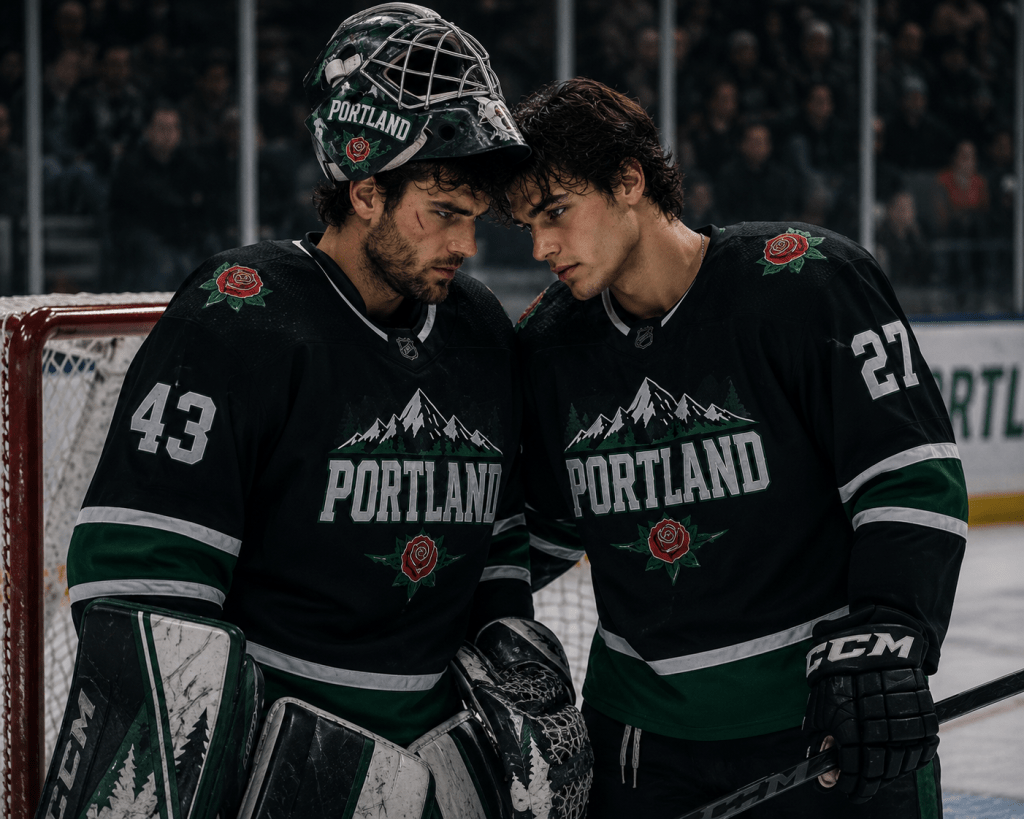
Deacon Worth does not talk about his head injury the way someone who has made peace with it would talk about it. He talks about it the way someone who has built a very convincing replica of peace and placed it where the real thing used to be. The reader knows the difference. Deke, for a long time, does not let himself know the difference, and that gap — between what the reader can see and what the character will admit — is where the pain lives.
Kon carries two years of almost, two years of waiting, two years of hope that kept getting pulled out from under him, and he carries it so quietly that the people around him might not notice. The reader notices. The reader is supposed to notice. I put it in the silences and the careful word choices and the things he watches when he thinks no one is watching him, and I trust the reader to feel the weight of it even when Kon himself would rather they didn’t.
That is the craft of it, as far as I understand it. You have to know the pain completely — its shape, its history, its specific texture for this specific person — and then you have to render it entirely in shadow. Not absence. Shadow. The outline of something rather than the thing itself, drawn precisely enough that what it outlines is unmistakable.
When a reader tells me a scene broke them and they can’t quite explain why, when they say they felt something they couldn’t name — that is usually this. That is the invisible pain doing its work. Not invisible because it isn’t there. Invisible because the character needs it to be, and the author loved them enough to honour that need while making sure the reader could see through it anyway.
It’s a strange kind of betrayal, in the best possible sense. You protect the character’s secret and you give it away at the same time.
That tension, held carefully, is one of the most powerful things fiction can do.
I’ve been asked a few times why hockey romance works so well as a subgenre, and I have given this question the serious, considered, academic attention it deserves.
It’s because the men are hot.
I mean, I could dress this up. I could talk about the narrative tension inherent in professional sport, the built-in conflict between individual desire and team loyalty, the way the rink functions as a pressure cooker for emotion, the push and pull of ambition and vulnerability. All of that is true and all of that matters and I will absolutely discuss it with you if you want.
But let’s be honest with each other first.
Hockey players are built like someone sat down and said what if a person, but more. They are large and fast and absurdly athletic. They do something genuinely dangerous for a living and they do it with a level of skill and commitment that is, frankly, its own kind of attractive. They get knocked down and they get back up. They bleed for it. They fight for it. Every single game they go out there and they leave everything on the ice, and there is something in that — in the wholehearted, full-contact, nothing-held-back quality of it — that translates directly into the kind of men they are off the ice too.
Men want to be them. Women want to be with them. And honestly, depending on the day and the specific player in question, some people want both simultaneously and I completely understand that.
But here is where it gets interesting, because hot alone does not sustain a subgenre. Hot gets you through the first chapter. What keeps you reading at two in the morning is something more specific than that.
Hockey players, at least the ones I write, carry their hearts in the same way they play the game — all the way. Deacon Worth does not do anything halfway. Neither does Flynn McKenzie, or Lachlan, or any of the men in this universe who have taken up residence in my head and refused to leave. They are competitive and driven and occasionally absolutely impossible, and they love with that same all-or-nothing energy that makes them great at the game. When one of these men decides you are his person, you feel it in your bones. There is no hedging. No half measures. No carefully managed distance. Just the full weight of a person who has decided and is completely at peace with having decided.
That, combined with the fact that they look like that, is really quite a lot to deal with.
Hockey romance works because it gives us men who are physically extraordinary and emotionally all-in. Men who are tough enough to take a hit and soft enough to mean it when they say I love you. Men who are worth writing about and worth reading about and, on the best days, worth falling a little bit in love with yourself.
I want to talk about something that comes up more than it should, which is the idea that tenderness between men requires explanation.
It doesn’t. But here we are, and since we’re here I’m going to make the case as plainly as I can.
Men are tender. Real men, actual men, the men who exist in the world outside of fiction — they are tender with their children, with their elderly parents, with the people they love who are hurting. They bring cups of tea without being asked. They sit with someone in the dark. They know, without being told, when what’s needed is a hand on the back rather than a solution. Nobody bats an eye at any of this, and rightly so.
So why, the moment two men love each other, does tenderness become something that apparently needs to be justified?
I’ve thought about this a lot, because I write men loving men and I write them the way I believe them to be — which is fully human, with the full range of what that means. Deacon Worth does not become a different person because the love of his life is Konstantin Andropov rather than a woman. He is still a Worth, still led by his heart before his head has a chance to object, still capable of touching someone’s face with a tenderness that costs him nothing and means everything. That is who he is. The gender of the person receiving that tenderness doesn’t change it.
Because here is what I know about the men I write: they are not tender despite being the men they are. They are tender because of it. Because they have chosen, consciously or not, to reject the premise that strength and gentleness cannot occupy the same person at the same time. They are strong men who have simply never accepted the idea that tenderness is something to be rationed or hidden or ashamed of. The ones who have been hardened by the world — and some of mine have been hardened considerably — love with a quietness and a specificity that would undo you if you saw it up close.
What I’m really writing, when I write tenderness between men, is perspective. The perspective of a man who looks at the person he loves — this specific person, this face, these hands, this complicated and particular human being — and feels something that expresses itself gently. Not because he’s performing sensitivity. Not because the genre demands it. But because that is what love does when it’s paying attention. It notices. It takes care. It shows up in the small gestures that accumulate over time into something enormous.
That is not a female experience. That is not a male experience. That is a human experience, and my men get to have it, and I will not be writing them any other way.
They love who they love. They love them tenderly. That’s the whole story.
I’ve been trying to write this post for a while now, and I keep running into the same problem: the honest answer is so large that it’s difficult to fit into sentences.
But I’m going to try.
When you publish independently, you are doing something that requires a particular kind of courage that nobody really prepares you for. There is no publisher behind you with a marketing budget and a publicity team and the institutional weight of a known name. There is no guarantee that anyone will find your book, let alone pick it up, let alone stay up until two in the morning because they can’t put it down. You put your work into the world and then you wait, and the waiting is its own particular flavour of terrifying.
And then someone finds it.
I don’t think I can adequately describe what it feels like the first time a reader reaches out to tell you that your characters got under their skin. That they stayed up too late. That they cried somewhere they probably shouldn’t have. That they immediately went looking to see if there was more. It is not a small thing. It will never be a small thing, no matter how many times it happens.
Because here is what readers actually are, for an indie author: they are the proof. The proof that the stories are worth telling, that the characters are real enough to love, that the hours and the doubt and the four in the morning rewrites and the moments of wondering whether any of this is going anywhere — that all of it meant something. A reader who connects with your work is handing you the most valuable thing they have, which is their time and their trust, and they are saying I chose this, and it was worth it.
Readers are also, practically speaking, everything that makes continuation possible. Reviews, word of mouth, a recommendation to a friend, a mention in a reader group — for an indie author these things are not nice-to-haves. They are the difference between a series continuing and a series stopping. Every single person who has ever taken a moment to leave a review or tell someone about a book they loved has kept a story alive. I don’t think most readers know how true that is, or how much it matters.
And beyond all of that — beyond the practical, beyond even the profound — there is this:
You make the loneliness of the work smaller. Writing is solitary by nature. You spend an enormous amount of time alone with fictional people, inside your own head, wondering if what you’re building connects to anything outside of yourself. Readers are the connection. They are the moment the story stops being yours alone and becomes something shared, something that exists between you in the way that only stories can.
What do readers mean to this indie author?
Everything. The world, and everything in between.
I am not being hyperbolic. I mean it precisely as literally as it sounds.
I get asked about emotional pacing fairly regularly, and I’ve been sitting with the question for a while now because I want to give an honest answer rather than a writerly-sounding one.
Here it is: I don’t think I pace emotion at all. Not deliberately. Not with a spreadsheet or a beat sheet or a highlighter and a copy of somebody’s craft guide. I don’t sit down and decide that chapter twelve needs a tension spike or that we’re due for a tender moment before the conflict escalates in act three.
What I do instead is live with my people until they feel real to me, and then I get out of their way.
That probably sounds like I’m being precious about it. I’m not. It’s actually the most practical approach I’ve found, because the moment I start managing a character’s emotional journey from the outside — deciding when they should crack, when they should soften, when the breakthrough is supposed to land — it goes flat. Every time. The reader can feel the hand on the lever. It stops being a person and starts being a plot function, and nobody falls in love with a plot function.
Lachlan McKenzie does not have his emotional moments on my schedule. Neither does Flynn, or Declan, or Isla, or any of the Worth boys. They have them when they have them — when the pressure has been building long enough, when the right person says the wrong thing, when they’re tired or scared or finally, finally ready. My job is to know them well enough to recognise that moment when it arrives on the page, and to not rush it or manufacture it or tidy it up into something more convenient.
What that means in practice is that I spend an enormous amount of time in pre-writing just being with my characters. Not plotting them. Learning them. Their histories, their specific fears, the things they do when they’re trying not to feel something. By the time I start writing, I know how they move through the world — and emotion is just part of that movement.
Does the pacing work out? Mostly yes, and I think it works because it’s honest. Readers are extraordinarily good at detecting when an emotional beat has been engineered for effect versus when it grew naturally out of who someone is. They might not be able to name the difference, but they feel it. The real moments land. The manufactured ones clunk.
And yes — this probably explains why my three acts don’t always look like every other three act novel on the shelf. The shape of the story follows the shape of the people in it, not the other way around. Sometimes that means a slow build that takes longer than conventional wisdom says it should. Sometimes the crisis hits earlier, or the resolution is quieter, or there’s a detour that exists purely because that’s where the character needed to go. I’ve made peace with that. More than made peace with it, actually — I think it’s a feature, not a flaw.
Because if every book followed the same emotional blueprint, hit the same beats at the same intervals, delivered the same shape of feeling in the same order every time — what would be the point? We’d all be reading the same book with different names on the cover. The world is considerably more interesting than that, and so are the people in it, and so, I’d argue, should be the stories we tell about them.
So if you’re sitting there with your own manuscript wondering how to pace the emotional arc — maybe the question isn’t when should this happen, but who is this person, and what would actually break them open?
Answer that well enough, and the pacing takes care of itself.
Specifically, let’s talk about the kind of men who get written about in sports romance — and the kind who should be.
Because here’s the thing I keep coming back to as both a reader and a writer in this genre: we do not need toxic masculinity in sports romance. We never did. It was never the point. The appeal of the hockey player, the football star, the elite athlete, has never actually been about emotional unavailability or aggression or the performance of hardness. That’s not what draws us to these characters. What draws us is the physicality of the life — the discipline, the sacrifice, the team bond, the body pushed to its absolute limits in service of something bigger than itself. That’s compelling. That’s romantic, in the truest sense of the word.
The toxicity was never the feature. It was always the bug.
My guys in the PHLu universe are masculine. I won’t pretend otherwise and I wouldn’t want to. They’re big and physical and competitive and they bleed for the game. But they also feel. Maybe not right away — often not right away — but the capacity is always there, underneath the pads and the tape and the persona they’ve built for public consumption. The work of the story, so often, is just getting them to the point where they can access it. Where they can name it. Where they stop being afraid of what it means that they feel things as deeply as they do.
That’s not un-masculine. That’s just human.
Let’s be honest about something, because I think we all know it and nobody in mainstream hockey coverage particularly wants to say it out loud: the real NHL has locker rooms. And locker rooms, when you pack them full of elite competitive athletes performing a very specific kind of hyper-masculine identity for each other day after day — well. We can imagine.
Actually, we don’t have to imagine. For those of us who’ve read The Long Game, Rachel Reid gave us Montreal (the team that Shane has been captain of for years), and Montreal gave us a pretty unflinching look at what that environment can actually feel like from the inside — the background radiation of homophobia that nobody names but everybody navigates, the way it shapes what you say and don’t say, what you show and don’t show, who you are allowed to be in that room. It’s not cartoon villainy. It’s subtler and more suffocating than that. And it rings true precisely because we all know, on some level, that it’s not fiction.
We also know — and this is the open secret of the entire hockey romance genre — that the realistic gay and bisexual representation level in the fictional hockey leagues writers have built is… let’s call it aspirationally high. Gloriously, joyfully, deliberately high. And that’s not naivety. That’s intention. That’s a whole community of writers collectively deciding that if the real league won’t make space, we’ll build our own league that will.
Which is exactly why I have the PHL.
The Premiere Hockey League exists, in no small part, so that my characters don’t have to spend their emotional energy surviving a locker room that wants to erase them. They can just — play hockey. Fall in love. Be whole people. The PHL isn’t a utopia exactly, it has its own tensions and politics and complicated men doing complicated things, but the baseline hostility that testosterone-saturated real-world environments so often produce? We left that at the door. On purpose. With zero apology.
I want to talk about Ilya Rozanov and Shane Hollander, because Rachel Reid did something with those two men in Heated Rivalry that I think about constantly, and that gets to the absolute heart of what I’m trying to say.
Here are two of the most compelling, most genuinely masculine characters in the genre. Shane — the golden boy, the clean image, the captain energy, the man who has spent his entire career being exactly what everyone needed him to be. Ilya — the showman, the villain of the rival team’s story, the smirk and the swagger and the devastating skill underneath all of it. Both of them, unquestionably, men in every way that word gets applied to athletes.
And for ten years, they hid.
Ten years of a relationship built in secret — in hotel rooms during away games, in the margins of a rivalry that the entire hockey world was watching. Ten years of something real and loving and sustaining, conducted entirely in the dark. Because the culture they lived inside — the professional hockey world, the media scrutiny, the locker room politics, the national identity wrapped up in both of them — didn’t have a box for what they were to each other.
And that is the indictment, right there. Not of Ilya. Not of Shane. Of the culture.
Shane’s image was so carefully constructed, so central to his career and his sense of self, that the idea of cracking it open felt unsurvivable. Ilya, for all his apparent confidence, carried his own weight — the Russian hockey landscape, his public persona, the expectations layered onto him from every direction. Neither of them had been given a world that said you can be this and also be loved openly. So they took what they could get, in the only way that felt safe.
That’s not weakness. That’s two men navigating an impossible set of constraints with the tools they’d been given by a culture that failed them.
What wrecks me about their story is that the love was never the problem. The love was easy, in the end — it had been there for years, it was the most natural thing in either of their lives. The problem was everything built up around them. The sport they gave their lives to. The personas required to survive inside it. The world that had very specific ideas about what a hockey player was and was allowed to be.
This is the real cost of toxic masculinity in sporting culture. Not the big dramatic moments. The quiet, decade-long cost of two people who loved each other having to hide it because the room they lived in had never been made safe enough for the truth.
This is why I write the men I write.
I want to give my characters the thing Ilya and Shane had to fight so hard for — a world, within the pages at least, where feeling things doesn’t cost you everything. Where you can be physically formidable and emotionally present. Where the team bond includes the whole person, not just the athlete. Where loving someone, regardless of who that someone is, doesn’t have to be a secret kept in hotel rooms for a decade.
My PHLu men are not soft. But they learn. They stumble toward understanding their own interiors like it’s a foreign country they’ve been told they’re not allowed to visit. And when they get there — when they finally let themselves feel the thing they’ve been skating around for three hundred pages — that’s the moment. That’s why we’re here.
Masculinity and emotional depth are not opposites. They never were. Sports culture convinced a lot of people they were, and sports romance, at its best, has been quietly and persistently dismantling that lie one fictional locker room at a time.
Ilya and Shane didn’t hide because they were broken. They hid because the culture hadn’t yet made room for them.