I live in rural Tasmania. Tasmania, Australia. A place that, I will grant you, has more claim to cold weather than most of the country — we are closer to Antarctica than we are to the equator, and there are mornings here that have genuine bite to them, mornings where you can see your breath and the paddocks are stiff with frost. So in that sense, I am ahead of most Australians. But snow? Actual, lying-on-the-ground, Winter-Olympics-calibre snow? That is largely not our reality. The highlands can manage it, occasionally, briefly, with the air of something doing you a favour it wasn’t entirely sure about. Down where I am, we get the cold without the compensation. We are, at the end of it, still an island hanging off the bottom of a continent that considers a cold snap a personality disorder.
And yet, every four years, I become completely unhinged about the Winter Olympics. And I mean that literally. I go nocturnal. For fourteen days I rearrange my entire existence around a television schedule being dictated by a time zone with no interest in my wellbeing whatsoever. I watch things at two in the morning. I watch things at four. I surface briefly into daylight, blinking, to attend to the basic requirements of life, and then I go back to the ice. My family and friends have come to understand that this is simply who I am for a fortnight every four years. They are very patient people.
It started — as so many defining passions do — at a precise, identifiable moment. Lake Placid, 1980. I was watching the Winter Olympics with the particular attention of someone who had not yet been fully claimed by them, and then two things happened that settled the matter permanently.
The first was the Miracle on Ice. If you know, you know. If you don’t: a group of young American college players, assembled by the extraordinary Herb Brooks, went up against the Soviet Union — a machine of a team that had dominated international hockey for years, a team of seasoned professionals playing with the kind of cold collective excellence that seemed almost inhuman — and they won. 4-3. In a game that had no business going the way it did, in front of a crowd that lost its collective mind, in a moment that transcended sport so completely that people who have never watched a hockey game in their lives know exactly what you mean when you say the Miracle on Ice. I was watching. I have never forgotten it. I have, frankly, never fully recovered from it.
The second was Robin Cousins. The British figure skater who took gold in the men’s event with a quality of skating that I — a child from Queensland with no particular frame of reference for what excellence on ice looked like — nonetheless understood immediately and completely was something extraordinary. The elegance of him. The apparent ease that concealed everything it cost. I sat in front of that television and thought: I need to see more of this. And that was that. I was hooked, thoroughly and permanently, and every four years I honour that commitment with the full dedication it deserves, which is to say: all of it, all the sports, all the hours, regardless of what the clock says.
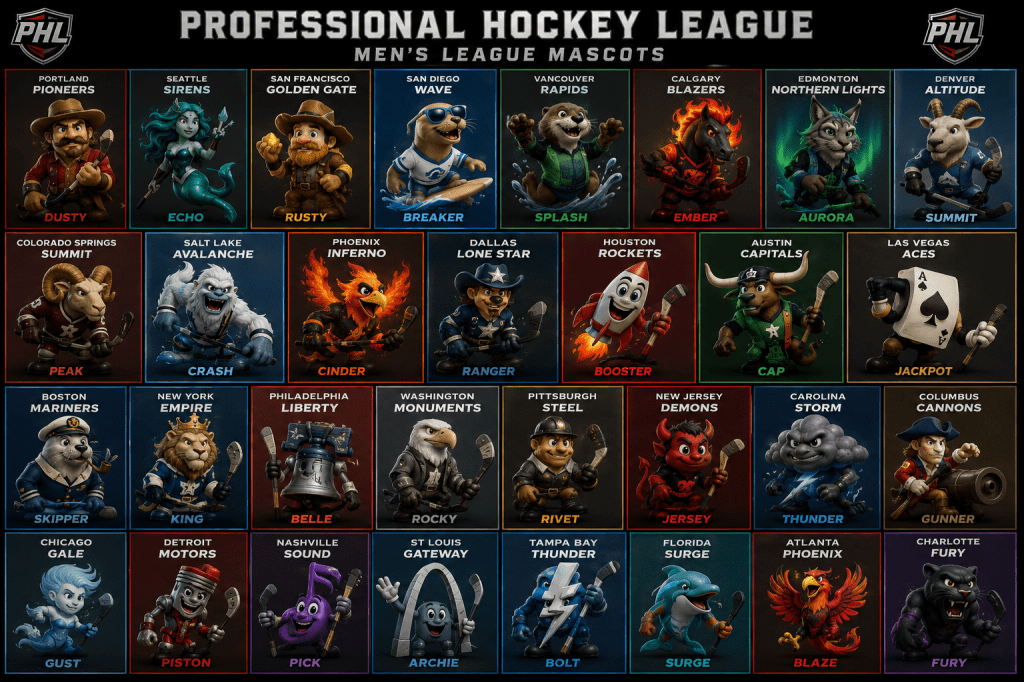
I won’t pretend I don’t know why ice hockey sits at the absolute centre of it all. What Lake Placid started, the years that followed deepened into something that has become genuinely, thoroughly, central to my life in ways I could not have predicted sitting in front of that television as a child. I follow the NHL the way my countrymen follow the AFL or the NRL — with the bone-deep, slightly irrational, entirely non-negotiable devotion that Australians reserve for their codes. My team is the Washington Capitals, and I carry them the way a Geelong supporter carries the Cats or a Queenslander carries the Broncos: with pride, with occasional agony, with the unshakeable conviction that this is simply part of who I am now and there is no point questioning it.
It has gone further than that, even. Ice hockey has wound itself so thoroughly into my imagination that I write romance novels set in its world — stories about the lives that happen off the ice, the loves that form in locker rooms and hotel corridors and the long strange geography of a season, the particular emotional texture of a life built around a game. The sport gave me a passion and then, in a way I find both surprising and completely inevitable, it gave me my creative life as well. Not bad for something I discovered because a group of college kids beat the Soviets in upstate New York when I was young enough for it to feel like magic.
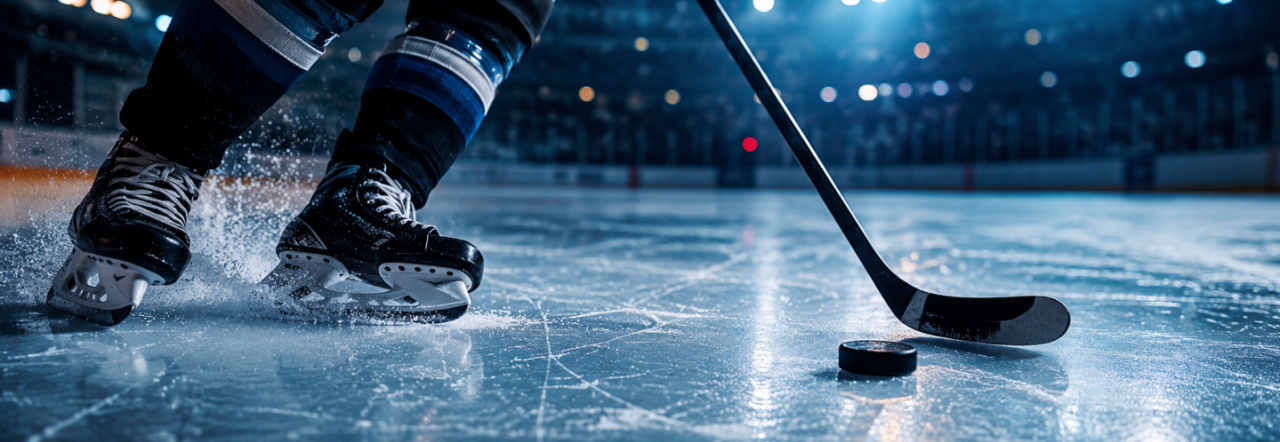
Because here is what ice hockey does that I have never been able to adequately explain to someone who hasn’t felt it: it is fast in a way that bypasses your brain entirely and goes straight to your nervous system. The puck moves as if it has its own agenda entirely independent of the players supposedly controlling it. The hits are seismic. The skill, when it surfaces, is breathtaking — a between-the-legs pass, a save that shouldn’t be physically possible, a goal scored in the quarter-second gap between a goaltender moving and the shooter reading that movement. And underneath all of it, always, is the ice. The particular quality of sound and light and speed that only exists in that environment. I grew up without it and I have loved it my entire adult life, which tells you something about the way sport can reach across any distance if it finds you at the right moment.
But the Winter Olympics are bigger than any one sport, and ice hockey — much as I love it — is not the whole story. Not even close.
The biathlon, for instance, is an event that should not work as spectacle but is utterly riveting. Cross-country skiing is, I think most people would admit, not obviously thrilling to watch. And yet the moment you combine it with rifle shooting — which is exactly as unhinged an idea as it sounds — something magical happens. The drama of athletes arriving at the range with heart rates in the stratosphere, forced to slow their breathing, to find stillness inside the physical chaos of their own bodies, and then to shoot with precision while everything in them is screaming otherwise. It is a metaphor for something, I am sure of it. I am not sure what. But I watch every race.
The sliding events — bobsled, luge, skeleton — terrify and entrance me in equal measure. These are sports in which human beings lie down on what is essentially a tea tray and hurl themselves down a tube of ice at speeds that no sensible person has any business travelling. The skeleton athletes go head first. I cannot overstate how much I think about this. They have seen the track. They know what is coming. And they point their face at it and push off anyway. If that is not a lesson in something, I don’t know what is.
I will not linger on the big air events except to say that I watch them through my fingers, that I am in a constant state of low-level horror for the duration, and that I have tremendous respect for every single athlete who stands at the top of a ramp the size of a small office building and simply decides to go. That is a category of human being I cannot fully comprehend and admire enormously from a very safe distance, preferably indoors, preferably with something warm to drink.
Figure skating, in all its forms — singles, pairs, ice dance — remains among the most beautiful things that sport produces, and Robin Cousins made sure I understood that before I was old enough to know how rare it was. There is a particular quality to the best figure skating performances, a moment when the technical and the artistic collapse into each other so completely that you forget you are watching something that requires extraordinary physical training and simply feel as though you are watching someone feel something, publicly, on ice, in sequins. Ice dance in particular operates on a frequency that is entirely its own. The intimacy of it. The way two people can communicate an entire relationship through how they hold each other in motion. I find it genuinely moving and I have done since 1980, and I refuse to be embarrassed about that.
But curling. Curling.
Here is where I must be honest with you. My love of curling is not rational. It does not require me to hold my breath in fear or clutch a cushion to my chest or say things like “oh no oh no oh no” at the television. It is, on its surface, a sedate sport. Rocks are thrown. People sweep. Enormous amounts of strategy are involved. Ends are played. Points are counted. And I am riveted from the first end to the last, in a way that I find difficult to explain to people who have not yet been converted and fully intend to keep trying to explain anyway.
There is something about the psychology of curling — the way every shot opens up or closes down possibilities several ends in advance, the way a team has to hold its nerve and its patience simultaneously — that I find completely absorbing. The communication between skip and sweepers. The read of the ice. The fact that it looks almost gentle and contains within that gentleness an extraordinary amount of competitive intensity. I have been known to watch the mixed doubles at three in the morning, sitting in a dark and very quiet Tasmanian lounge room, absolutely locked in, because the time zone does not care about my schedule and neither, frankly, does curling.
If you have never given the Winter Olympics a proper chance — if you have scrolled past it, assumed it wasn’t for you, told yourself you don’t understand enough of the sports — I am here to tell you that understanding is not the entry requirement. Curiosity is. Start anywhere. Start with the biathlon, or the ice dance, or the terrifyingly beautiful chaos of the big air final. Or start with curling, and watch what happens.
And if you really want to understand how someone from an island at the bottom of the world ended up here — writing novels about hockey players, losing sleep over Washington Capitals games, watching curling in the small hours with her whole heart committed to all of it — find footage of Lake Placid 1980. Watch the Miracle on Ice. Watch Robin Cousins skate.
You’ll understand immediately. I promise you that.